I’m a writer. I write speculative fiction, mostly. I’ve been writing that for four decades, and as my main focus during the last six years. I love writing—there is something life-giving to me in putting my thoughts into text. A bonus is when other people read what I’ve written, and we engage in a discussion. Like any artisan or creator, writers love talking about craft. What works, what doesn’t. Sometimes it’s about commercial realities in our world, more often it’s about discovering our “voices” and creating works that resonate and look effortless.
In narrative works of any kind, characters are what hook us into a story and maintain our interest in the tale as it unfolds. Characters don’t have to be human, of course. Mythology abounds with anthropomorphised animals and creatures of our imaginations. To the best of my knowledge, that’s the one thing that’s in common across all human groupings.
Western storytelling is dominated by stories of heroes, usually when they go on journeys (“real” or metaphorical). The Western storytelling tradition sees itself as universally human. The “culture wars” we’ve been fighting for decades now are waged by a bunch of people who believe cis male heterosexual white-skinned humans are best, actually. They’re wrong, but they have money and power. I believe what we’re living through is a last gasp of a poisonous world-view, deadly and destructive. We can’t be complacent that the main perpetrators will just die out, taking their toxicity with them.
I grew up in a culture formed by those views at a time when they were challenged. I was lucky in that when I was a young teenager, a handful of my teachers were into what we’d call decolonisation now. Those teachers taught me there are alternative views of our world. I was additionally lucky in that many of my friends at school were from cultures other than that of the British colonisers.
That stuff is important because it allowed me to default to the assumption that there are numerous ways of storytelling. In all of those “how to write fiction” books, articles and courses out there, what are described as rules really are guides. If you want to write and get published by the established markets in the UK, USA, or similar English-speaking countries, then those guides are more like rules. Even then, it’s subjective. Vibes dominate.
One good thing about the development and proliferation of internet technologies has been to allow more people to find alternative ways to get their work read by more people.
(There is a toxic element to all this, but that’s not the focus of this essay. The gen-AI that’s posing an existential crisis to the creative arts is a symptom of that toxicity. Yes, there is a reason why a powerful element of tech culture has tied itself to authoritarian/supremacist politics.)
I grew up at a time before the internet burst out from the research labs, universities and military establishments. I’d discovered and joined fandom in the early 1980s. Fanzines were the way people shared their views and creative endeavours—fic, art, the occasional ode.
My entry into writing original fiction was through writing fanfic. It is not the only way to learn how to write fiction, but for me it was the most formative. I was taught creative writing at school, but have long tried to put out of my mind what I was taught at school.
This year I tracked down a secondhand copy of Renni Browne and Dave King’s Self-editing for Fiction Writers (second edition). It was recommended by a few writers who I greatly admire, and it’s excellent. It chimed with me because it’s not proscriptive, and while it was first published in 2004, it’s alive to the fact that fashions change. And, yes, there are changing fashions in fiction writing.
So, what has all that to do with writing characters?
Creating characters is achieved through a series of sleights of hand. Characters in fiction are illusions, conjured by use of numerous tricks—dialogue, how other characters see them, how they react to events. Readers feel like they know the well-written characters—they are along for the ride, which depends on readers not noticing the techniques deployed to create the characters.
Characters illuminate facets of humanity—good, bad, and everything in between. There is great variation across populations of human beings. One of the key things to “get right” about creating characters is to reflect that diversity.
My learning trajectory, as I mentioned earlier, was writing fanfic.
Fanfic is primarily about having fun. The best fanfic is fun to read, and usually its because the author of it was enjoying the process of writing it.
But, it is also possible to learn the craft of writing while creating fanfic.
The fanfic I enjoyed reading and creating was based on television series and movies. While I didn’t set out to learn how to write characters when mucking about with fanfic, it was part of the process of writing fics that people enjoyed reading. It was, in effect, a basic education in how to learn about what works and what doesn’t in recreating screen characters in text.
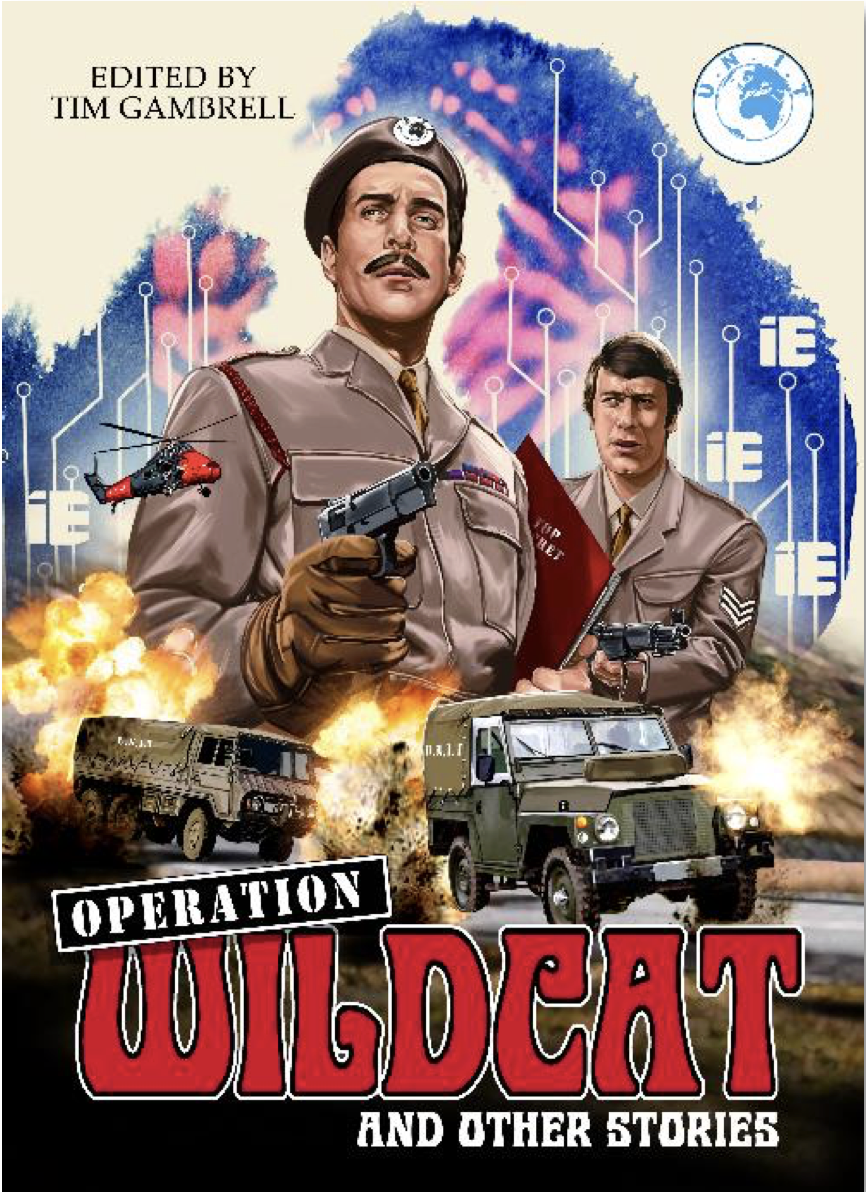
My professional writing career includes writing fiction for licensed works. It’s similar to, but not the same as, writing fanfic. The main similarity is about (re-)creating for the page characters best known from the screen. It’s more important to get it right in licensed work than in fanfic because of the commercial aspect.
I also write original fiction, and I’ve applied much of my learning from both fanfic and writing licensed characters to that. The big difference is in bringing to life characters who readers don’t already know. It helps when I “see” my characters in my imagination.
I do a lot of my writing in my head before I pick up my pen or start typing, and everything spills out on the page. If the character exists in my head almost fully formed, it’s a much easier process. If they’re sketchy, or playing hard to get, then it takes more work. I’ve learned that it’s best for me to get words down on the page and refine things with editing. The editors I’ve worked with to date have been brilliant in seeing where I’ve not yet done the work and helped me polish. Books like Browne and King’s mentioned earlier are helpful to bring out unique features of my characters—to help make them live on the page.
Reading widely is essential, too. Earlier this year I read Norman Mailer’s The Executioner’s Song. It’s a work of journalism about real people but written in the style of a novel. His ability to draw out the people behind what were headlines truly is extraordinary. Snippets of description are dropped here and there, with some repetition and reminders, and the different interpretations of events and characterisations coming from the cast creates a fascinating tableaux in miniature. It’s small-town 1970s USA, and I keep thinking how much those same (or similar) people and situations are driving the politics of now.
Lots to learn.
Leave a Reply