
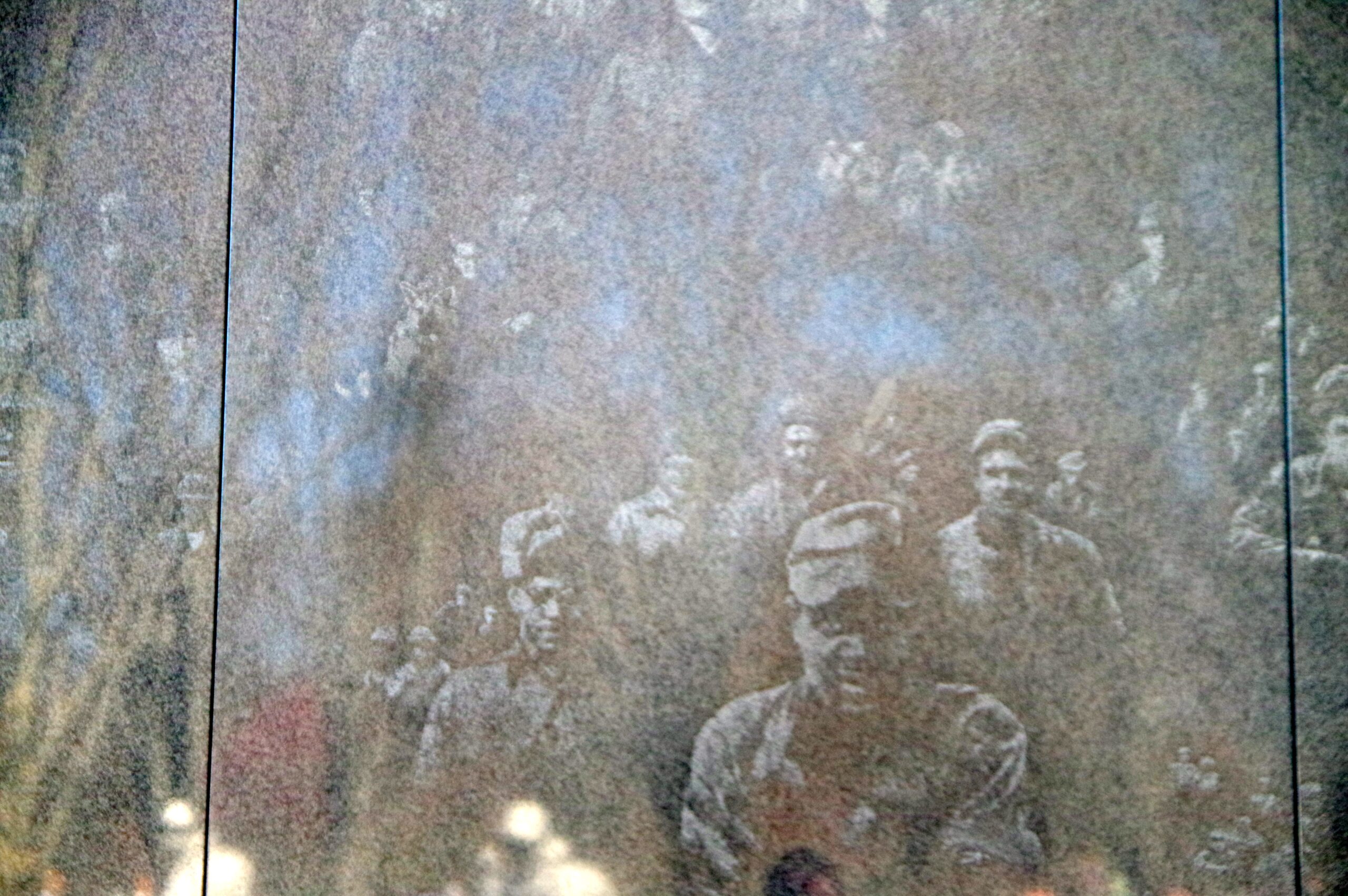
Remembrance of those who died in war is not about glorifying violence, or martial pride over shame. It’s about protecting future life from future wars.
At 11 o’clock on the 11th day of the 11 month, several countries mark the anniversary of the signing of the armistice that ended the terrible war of 1914-18. The first Armistice Day, as it was called, in 1919 in London commemorated those people in the navy, army and air force who were killed in action. Contemporary reports indicate that the idea of “never again” permeated the event.
The seismic shift of the 1939-45 war resulted in the name of the commemoration shifting from Armistice Day to Remembrance Day, or Veterans’ Day in the USA (although that came after the defeat of the USA and its allies in Korea). The number of conflicts since 1918 continues to grow, and it’s not surprising that the commemoration has extended to cover the dead from those additional wars. Some countries keep it focussed on only military deaths in war, while others have extended it to cover all who died in war.
My family wasn’t military-minded, but my parents and grandparents were affected by war. My paternal grandparents were both born in 1904 and during the 1914-18 war they lived in the Netherlands, which remained neutral and wasn’t over-run and destroyed like neighbouring Belgium. My grandmother described her experience of it as akin to an international football competition. It wasn’t until much later that they learned of the horrors. Propaganda is powerful.
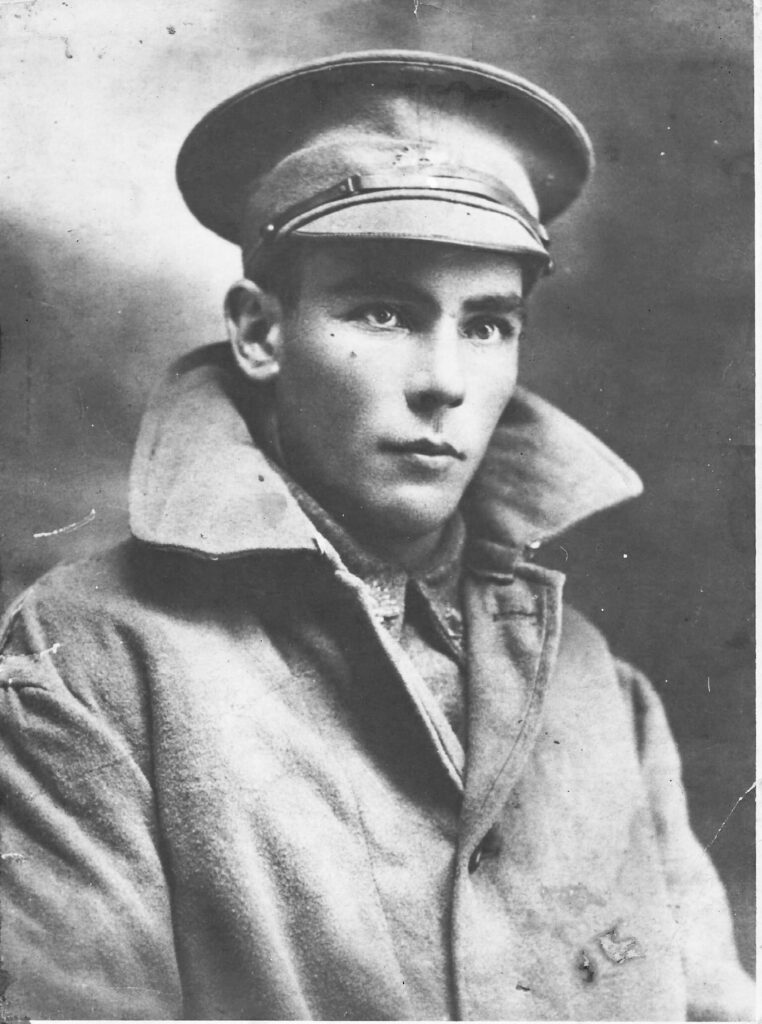
My maternal grandmother was born in 1920 in Australia. Her father was old enough to sign up for the 1914-18 war, and he did answer the strident call for volunteers to join the first Australian Imperial Forces. He became a mechanic in what later became the Royal Australian Air Force, until he was discharged on medical grounds (bad lungs). He put in his papers a second time, and they were accepted on 11 November 1918. Yeah, he didn’t go overseas and fight. His brothers were too young for that war, but most of them signed up for 1939-45 and all survived. My great-grandfather’s lungs finally did him in during 1932.
My maternal grandmother was a nurse who married a young soldier in 1940. I never knew him because while he survived his extensive overseas deployments, they divorced in 1946.
As for my paternal grandparents’ experience of the 1939-45 war… my grandfather spent much of that war in a Nazi prison camp in the Netherlands. He was a minister in the church and the invaders feared he would speak out against Nazism. My grandmother spoke German fluently and tirelessly advocated for her husband to the Gestapo in the Hague. My father shared a memory of his with me of my grandmother ticking off a bunch of young German soldiers who were looting during the final days of the occupation; they could have shot her, but they dropped the stolen stuff and ran. My grandmother could be formidable when she needed to be. Both my grandparents survived and moved the family to Australia to live in the early 1950s. They were ardent supports of Amnesty International when that was founded, were campaigners for nuclear disarmament, and marched in anti-Vietnam war protests.
I was a child when Australia became involved with the USA in Vietnam, too young to understand the impact of the conscription and then ignominious withdrawal. I have firmer memories of the campaign to redress the terrible way the returning soldiers—many of them conscripted—were shunned. On top of that, calls to acknowledge the awful psychological and physical damage done to so many of them were ignored or downplayed for far too long.
These were formative experiences for me. Broadly speaking, they’ve shaped my reactions to every conflict I’m aware of since about 1975, as well as how wars are remembered by those who survive.
On 25 April 2011, I attended a dawn service in front of the Australian war memorial near Hyde Park in London. I want to mention three observations I made at the time.
Firstly, the jolt I felt when I realised that the medals worn by so many of the young people there were their own and not those of their parents, grandparents, or great-grandparents.
Secondly, there was a jarring reference to the 1914-18 war being a fight for liberty against tyranny. The causes of war are usually far more complex than often described, but 1914-18 is perhaps better characterised as a last-gasp clash of European empires. 1939-45, on the other hand, was a fight against tyranny.
Thirdly, those gathered there that ANZAC Day were, I think, mostly wanting to share a sense of loss—of friends and family in recent conflicts, and the impact of earlier wars on families. I did not sense it was a show of martial pride, or celebration of heroes. While Australia and New Zealand were on the eventually victorious side of that war, ANZAC Day commemorates the devastating losses at Gallipoli, which was also a military disaster due in large part to poor strategic planning.
When I was a kid, the message was that we should be proud of the ANZAC troops. I think that misses the point of remembrance. It’s not about pride or shame, it’s about not forgetting the terrible loss of life and striving to not act in ways that will lead to similar carnage. I think it’s also about not forgetting the damage done to those who survived and leaving them on a scrapheap. I’m referring to both those who were sent to fight, and the families and friends back home.
The dreadful losses suffered during the entire 1914-18 war inspired the first Armistice Day in 1919. People needed to remember individuals who never came back from the war. There was also a revulsion at the industrialisation of the killing. Lots of people didn’t want a repeat of it. Lots of people questioned the purpose of the war, and the socio-political upheaval during and after it spawned a few ideologies, like the original types of fascism.
The war of 1914-18 didn’t just kill multitudes. The physical and psychological damage suffered by millions is difficult to contemplate. Over a century ago, understanding of the devastating consequences was far less than it is now. And there were survivors who lived a long time, carrying their trauma in their various ways. Some treated, many not. A lot of it affected the next generation and families today can see the trail.
Different countries dealt with the multiple costs in their particular ways. In the UK, the government issued a pension to returned military personnel. For many, it was inadequate. There were calls for businesses to provide jobs for returned soldiers, and both employment and housing relied almost entirely on voluntary or charitable works. The work done by those charities was extraordinary, and people were willing to give generously to the new “red poppy appeals”. I don’t think that the introduction of a more complete welfare system, including the National Health Service (NHS), following the 1939-45 war was a coincidence.
I’ve long been uneasy about relying on charities to provide everything needed by those damaged by war, and for as long as those requirements exist. The British Legion does amazing work, but they simply cannot be expected to do everything and fundraise sufficiently. Not when the NHS is in collapse along with public housing and social welfare—all the result of Conservative Party policies and actions while they’ve been in power from 2010 to July 2024, and Labour’s failure to meaningfully reverse or tackle the socio-political issues left in the Conservative’s wake.
A US veteran of more recent wars wrote in 2014 that the remembrance of Armistice Day “was supposed to protect future life from future wars.” (Rory Fanning, “Why doesn’t the US observe Armistice Day? We’re more comfortable with war than peace”, The Guardian, 11 November 2014). I’m inclined to consciously think on what those first armistice days were, and what they mean for today’s world. I believe we owe it to those gone to put in the work to resolve conflicts where we can without resorting to horrific bloodshed. But, when war cannot be avoided, then we need to make sure that all those who are affected by the violence aren’t left to fend for themselves.
They shall grow not old, as we that are left grow old:
Laurence Binyon, 1914
Age shall not weary them, nor the years condemn;
At the going down of the sun, and in the morning,
We will remember them.
Lest we forget.
At 11am GMT on the 11th day of the 11th month, I choose to remember that commemorating the lives of those who died in war is not about glorifying violence, or martial pride over shame; it is about mourning the dead and protecting future life from future wars.
Lest we forget.
Leave a Reply